All-on-X AI-Guided Diagnostic Planning
All-on-X — February 2026

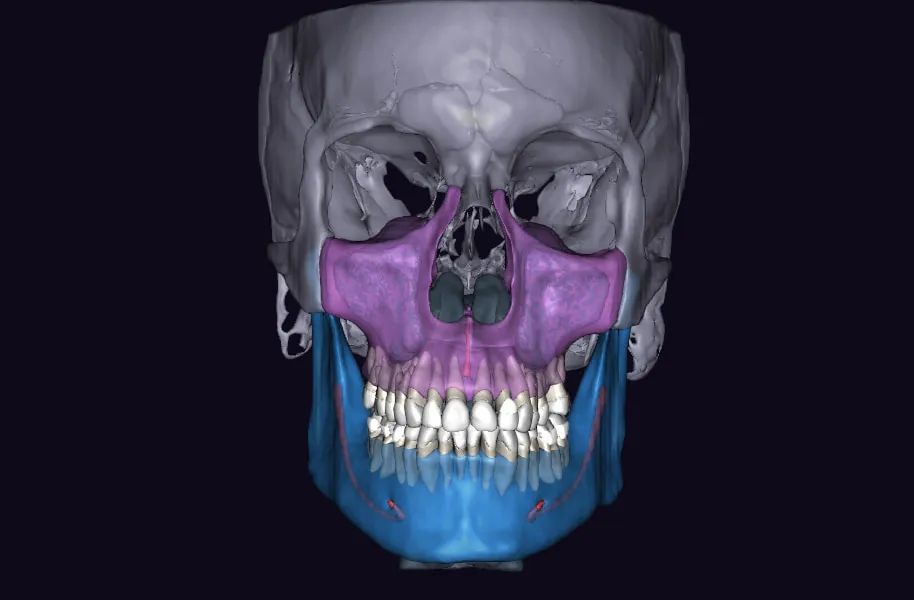
Case Overview
This case demonstrates our fully digital diagnostic workflow — combining AI-powered CBCT analysis with facial scan overlay to plan a full-arch All-on-X restoration with precision that traditional methods cannot match. Every stage of the planning process, from skeletal segmentation to prosthetic design, was completed digitally before any clinical intervention began.
AI-Powered CBCT Analysis
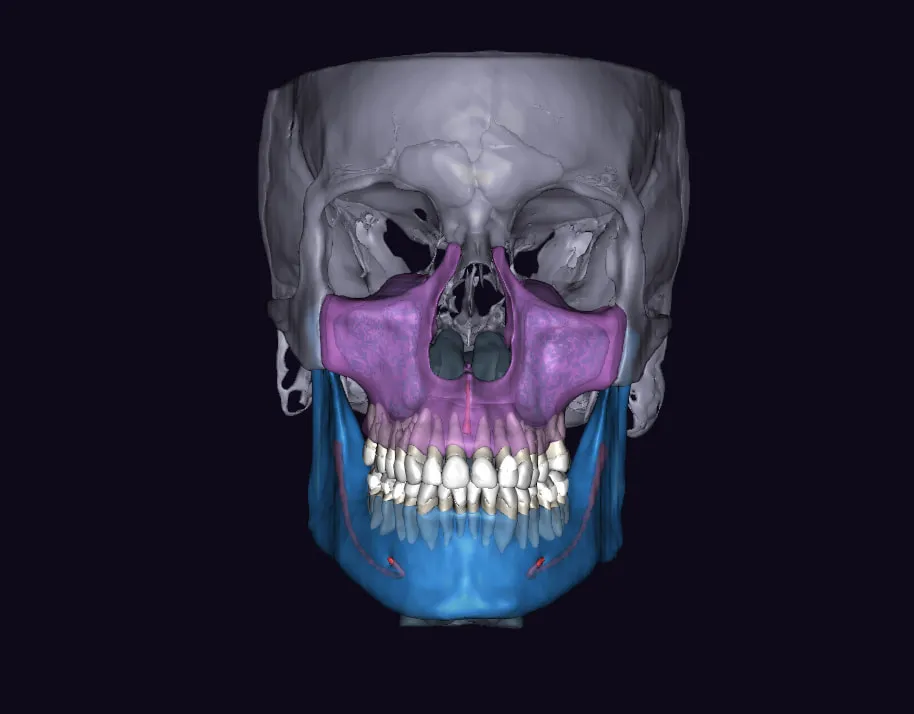
The patient’s CBCT scan was processed through AI diagnostic software that automatically segments key anatomical structures. The maxilla (purple), mandible (blue), and individual tooth roots are isolated and color-coded, giving the clinical team an immediate 3D understanding of bone volume, root positions, and the spatial relationships that will determine implant placement.
Lateral Skeletal Analysis
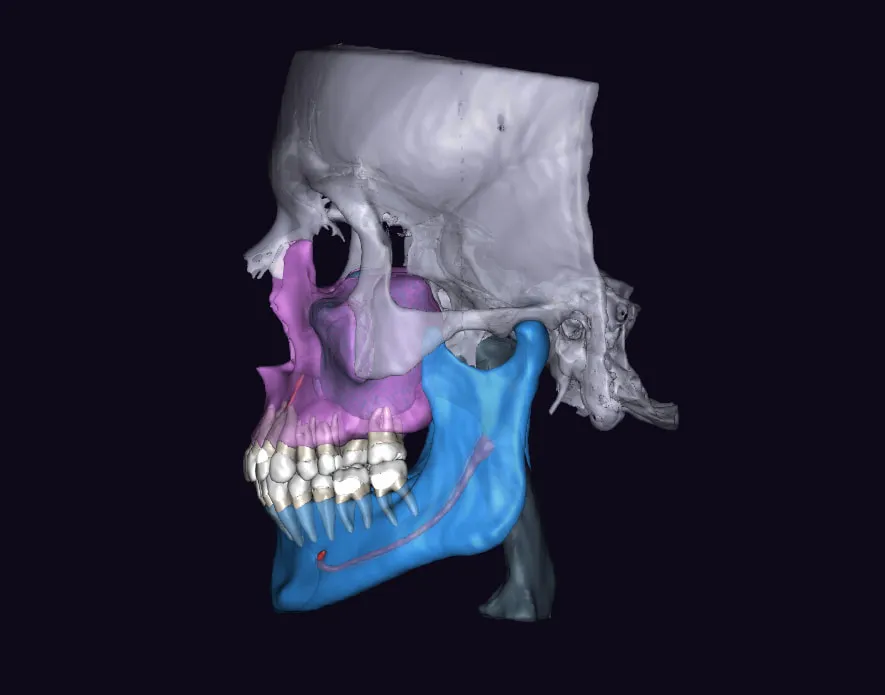
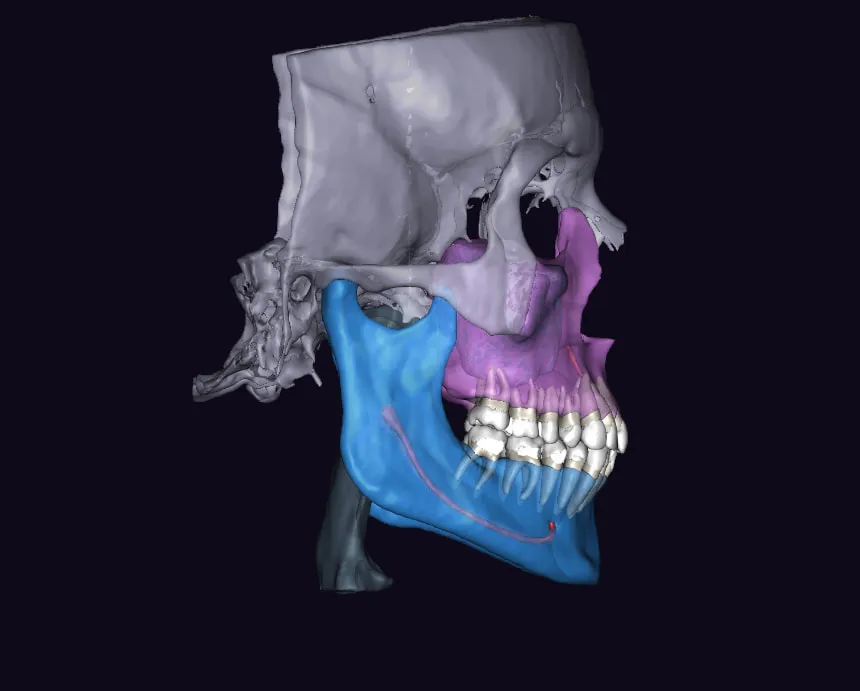
Left and right lateral views reveal the full skeletal profile — critical for evaluating bone density along potential implant axes, identifying the inferior alveolar nerve canal, and assessing vertical bone height in the posterior regions. The AI segmentation highlights the mandibular nerve path (red trace), allowing the surgical team to plan safe implant placement with clear anatomical margins.
Digital Smile Design & Prosthetic Planning
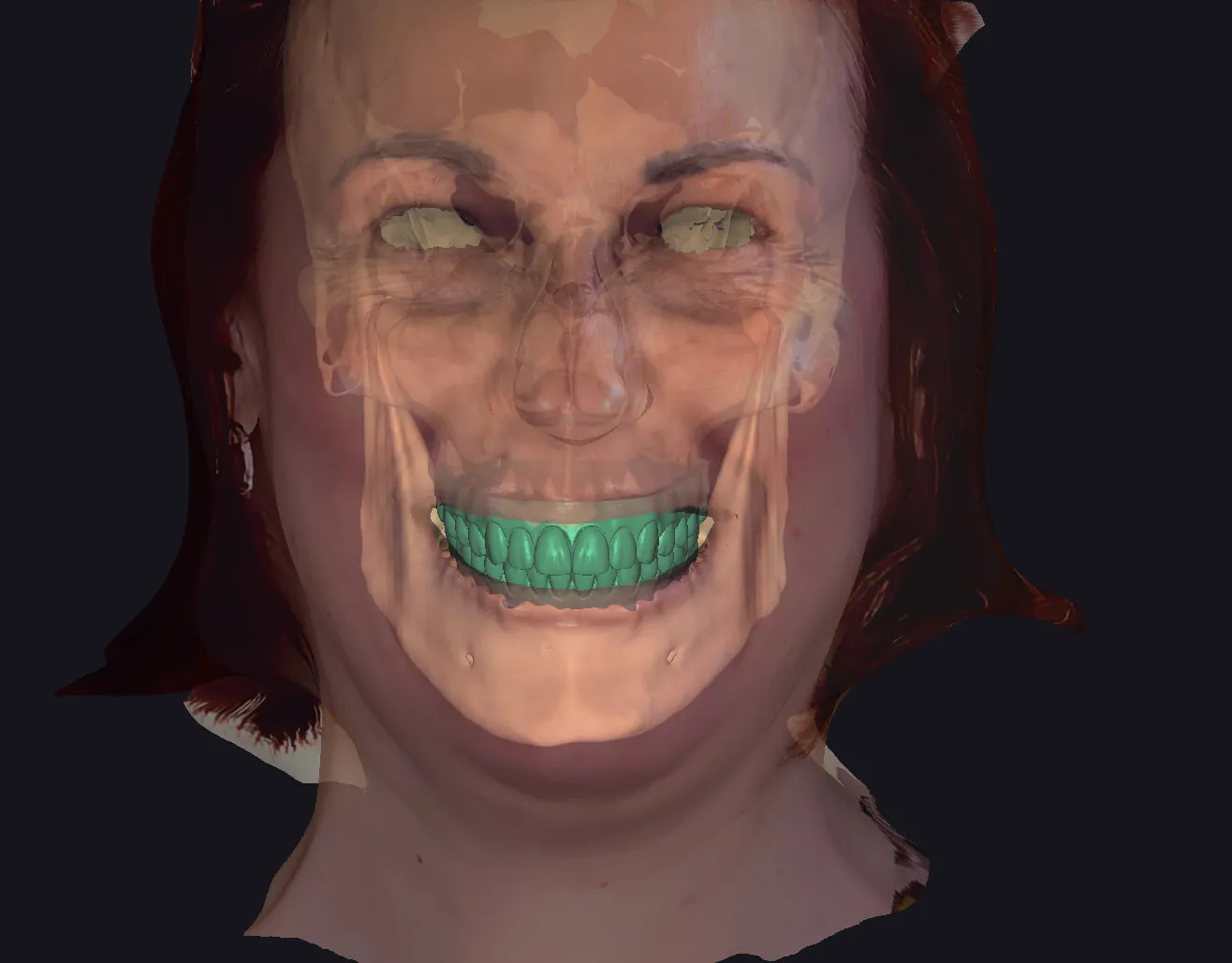
The digital workflow merges the AI-analyzed CBCT data with a 3D facial scan of the patient. The proposed prosthetic waxup (shown in green) is positioned within the patient’s actual smile envelope — aligning tooth position, midline, and gingival display to the face rather than designing in isolation on a model. This face-driven approach ensures the final prosthetic looks natural in the context of the patient’s facial proportions.
Pre-Operative Digital Verification
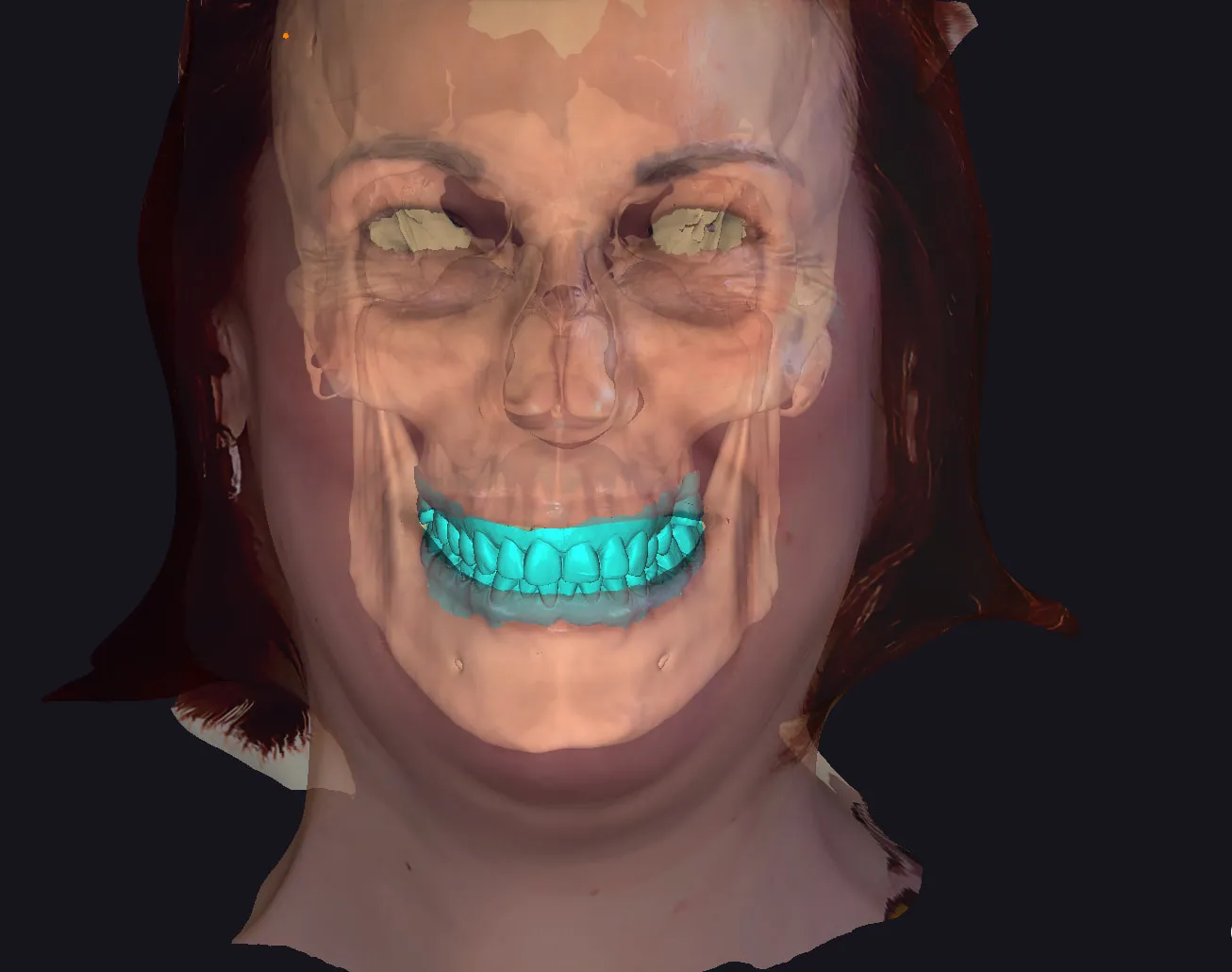
Before surgery, the finalized prosthetic design (cyan) is verified against the skeletal anatomy one final time. This composite view — patient face, bone structure, and planned restoration layered together — gives both the surgeon and the prosthetic technician a shared visual reference. Implant positions, screw channel access, and prosthetic contours are all confirmed digitally, reducing surprises at the time of surgery and minimizing chair-side adjustments.
Result
This AI-guided planning approach represents the next generation of All-on-X case preparation. By combining automated CBCT segmentation with facial-driven prosthetic design, the clinical team receives a comprehensive treatment plan that accounts for skeletal anatomy, soft tissue, and esthetic outcomes — all before the patient sits in the chair. The fully digital record also means every planning decision is documented and revisitable, supporting collaborative case review between surgeon and lab.
Get Started
Ready to Work Together?
Upload your case files directly or reach out with questions — we respond within 24 hours.